
Materials & finishes
Material changes
everything.
Two boxes can share the same dimensions, the same artwork and the same closure, and feel like they belong to different companies. The difference is board, surface and finish — decided early, because they set what the printing and construction can do.
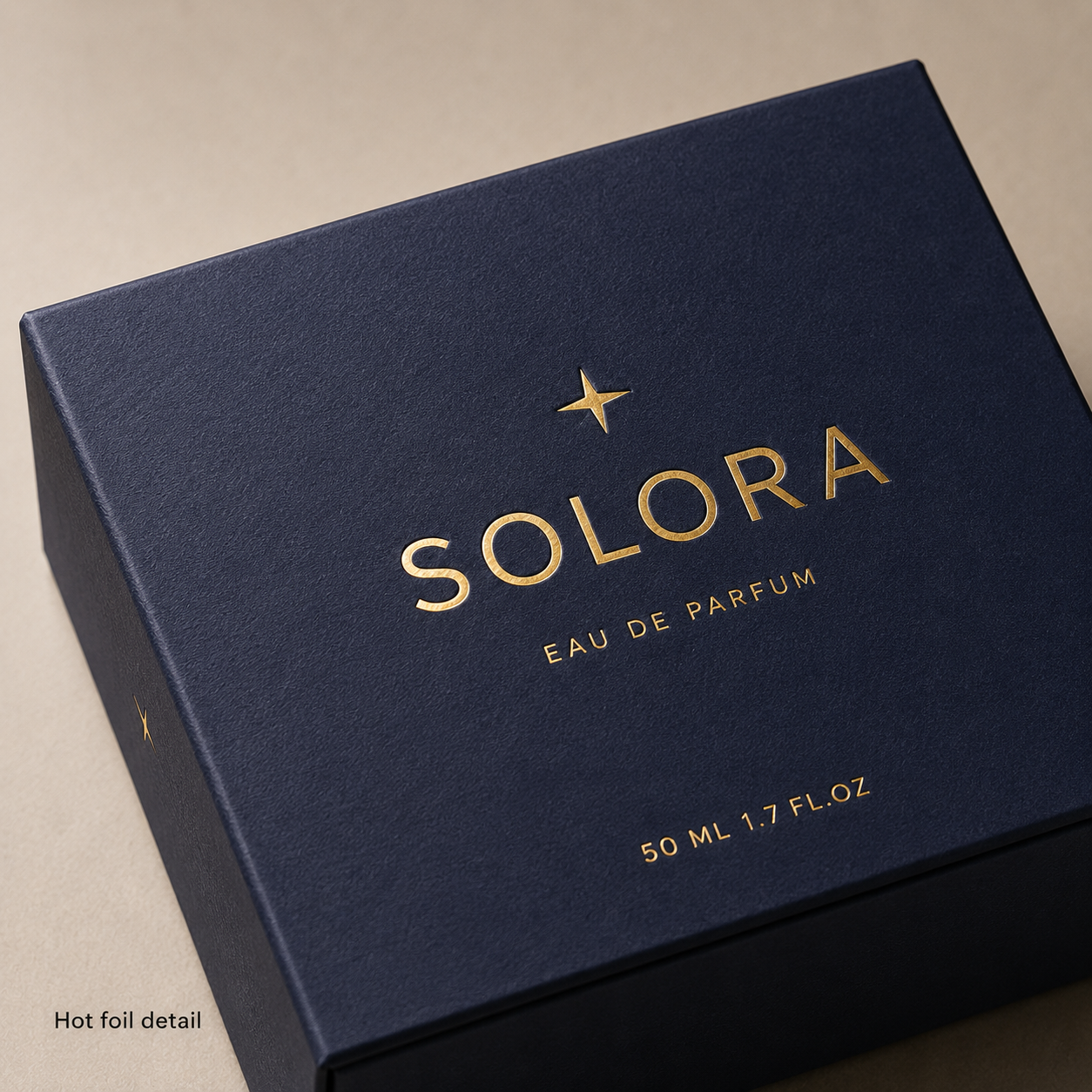
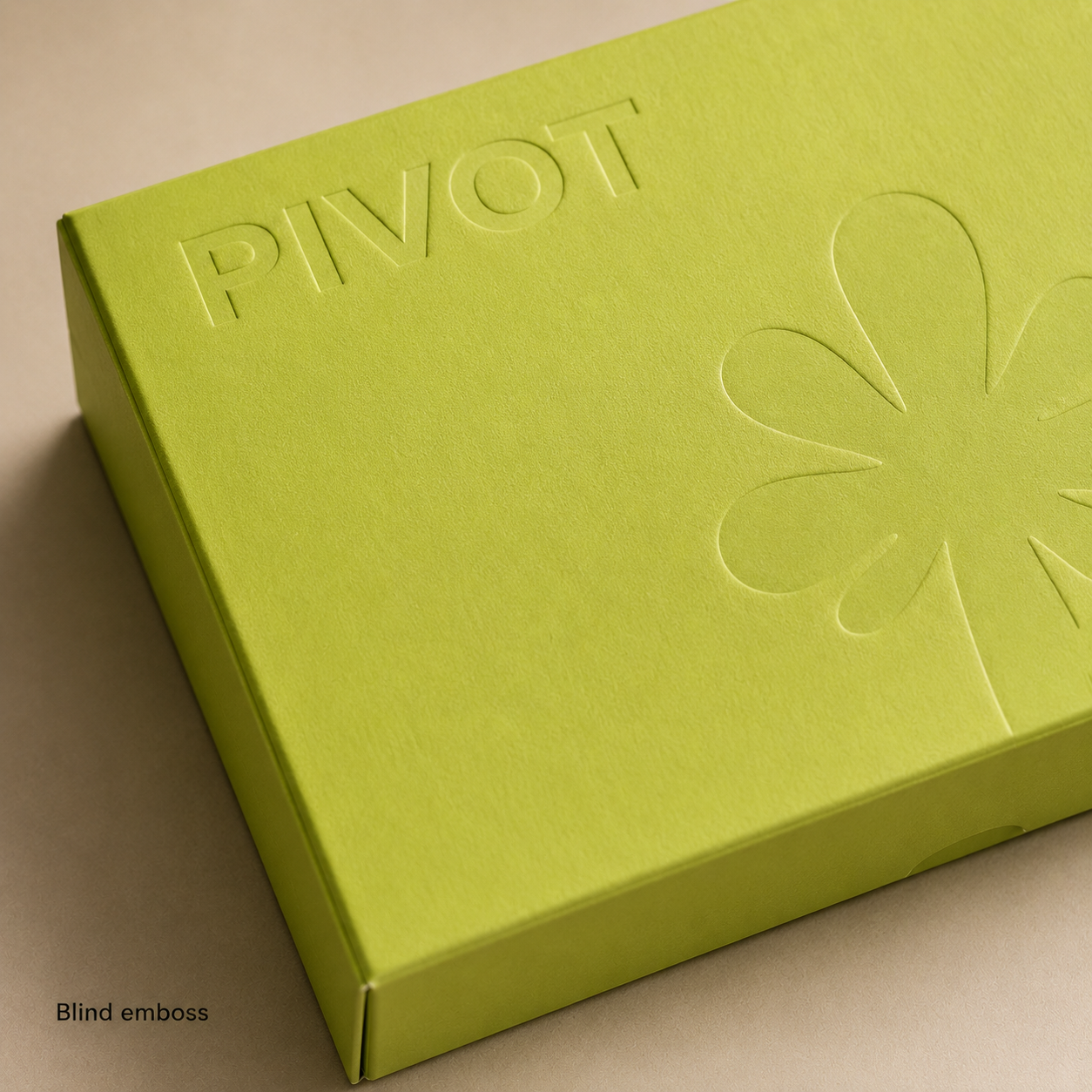
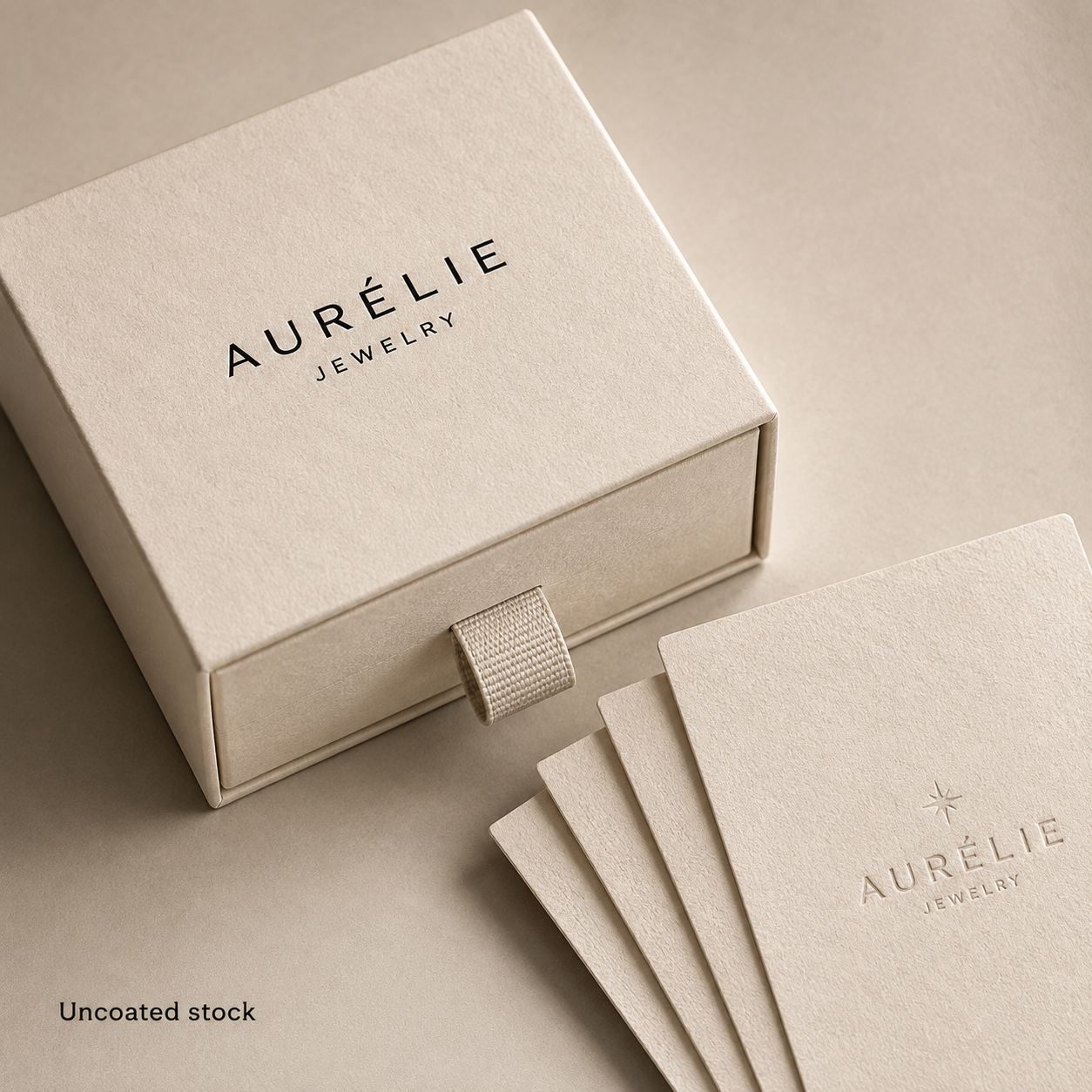
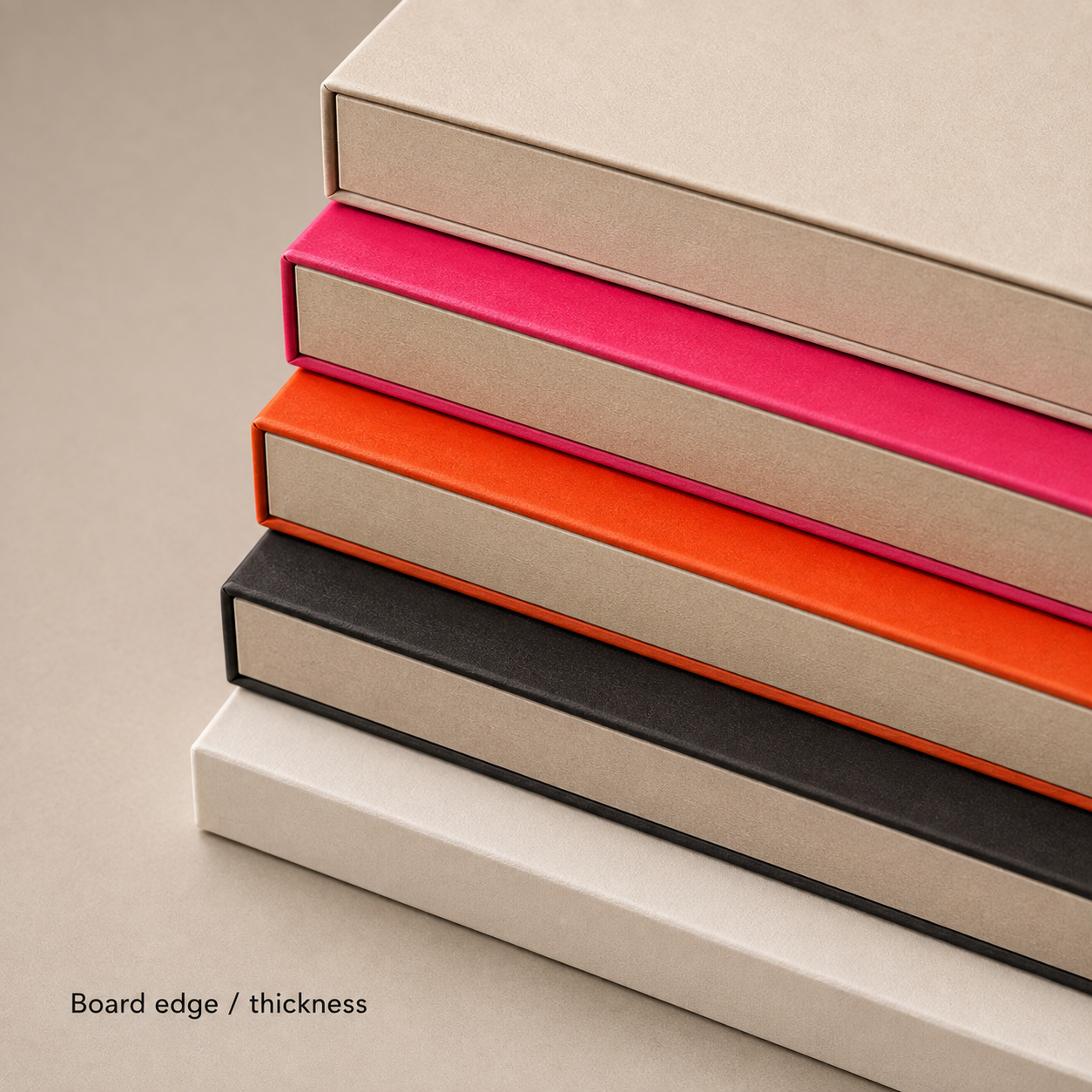


Five decisions,
every project.
Material
Board weight and fibre decide how the packaging holds its shape, how the print sits and how it feels in the hand. Heavier is not automatically better — it is heavier to ship.
Run length usually decides the process. Litho for volume and colour accuracy, digital for short runs and variants, screen for solid coverage on textured stock.
Finish
One finish, used deliberately, reads as considered. Three finishes competing on one panel read as a sample sheet.
Structure
How it opens, what holds the product, how it packs flat and how quickly a person can assemble it. Structure is where cost and experience meet.
Colour
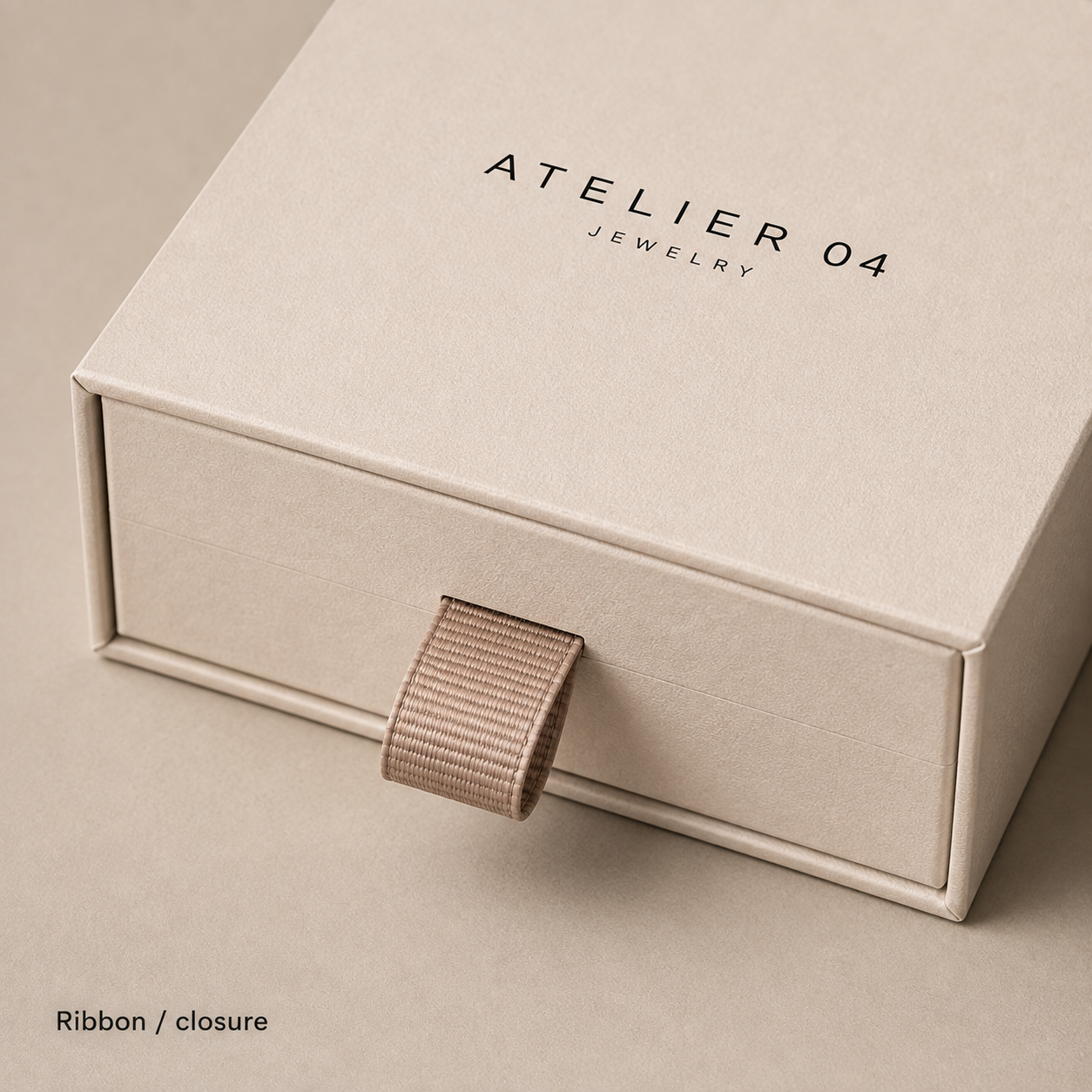
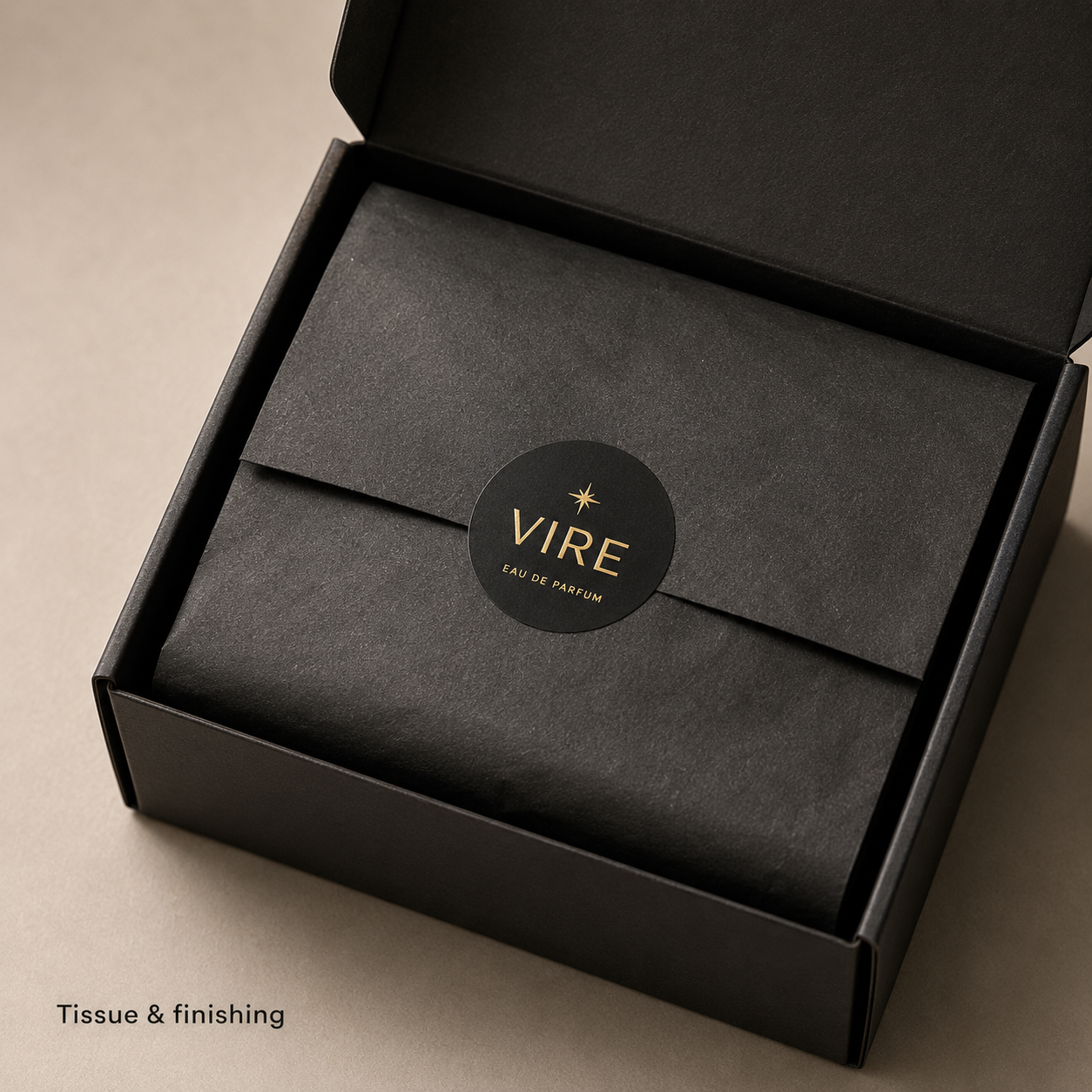
The same colour shifts across uncoated board, laminated board, ribbon and tissue. We plan for that instead of discovering it at delivery.
Weight is a design
decision.
Board weight sets rigidity, how print sits on the surface, what the parcel costs to move and how the packaging reads in the hand. Heavier is a choice, not an upgrade.
We specify the lightest board that still performs. Illustrative range below — the final figure depends on structure, run length and production route.
Less waste begins with better decisions.
Packaging decides more than how a product looks on arrival. Dimensions, board weight, structure and how the parcel travels all set how much material gets made, moved and thrown away — and most of it is fixed in the first week, on a spec sheet.
Where the brief and the production route allow, we look for the smaller version of the same idea: right-sized dimensions, one material instead of three, lighter board wherever the structure still holds.
We do not publish impact figures or certifications we cannot evidence. What a chosen material and route can support is confirmed before you commit.
Discuss materials →Supported by selected manufacturing partner standards. Availability is confirmed per project and per supplier, never assumed across all of them.